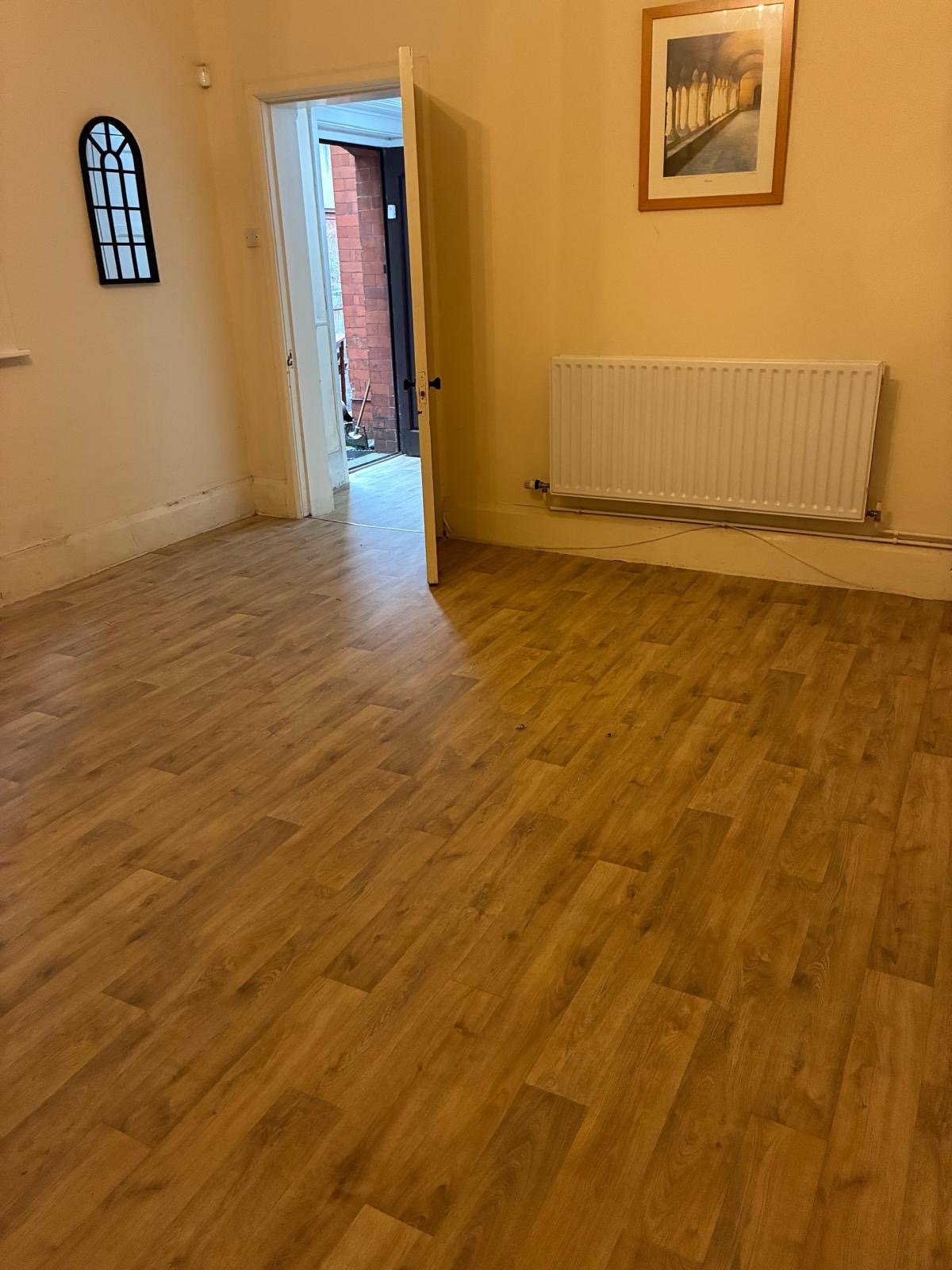
Good-quality sheet vinyl usually lasts around 10 to 20 years in a home. The biggest factors are the wear layer, how busy the room is and how well the floor was fitted. When you see tears, curling edges, lifting seams or dirt that won’t clean off, it’s usually time to replace it. Here’s how to tell, and how to make your next vinyl floor last longer, from the team that fits vinyl flooring in Chorley.
What decides how long vinyl lasts
Two vinyl floors can look the same in the showroom and wear very differently at home. These are the things that make the difference:
- The wear layer. This is the clear top layer that protects the printed design. A thicker wear layer resists scuffs and wear for longer, and it matters more than the total thickness of the vinyl.
- How busy the room is. A kitchen or back door entrance takes far more footsteps, grit and spills than a downstairs WC.
- The floor underneath. Vinyl follows the shape of the floor below it. Bumps, gaps and nail heads in old floorboards can show through and wear the vinyl from underneath.
- How it was fitted. Neat edges, sealed seams and the right fixing method for the room all help the floor stay flat and watertight.
- How it’s looked after. Grit, dragged appliances and the wrong mats shorten its life more than anything else.
Signs your vinyl floor needs replacing
Tears, cuts and holes
A tear lets water and dirt get under the vinyl, and it usually spreads. In a kitchen or bathroom, a tear near the sink, bath or toilet is the first thing to deal with.
Curling edges and lifting seams
Edges that curl up at doorways or along the walls, or a seam that has opened, are trip hazards and let water underneath. They can be a sign the adhesive has failed or that moisture has got under the floor.
Bubbles and soft spots
Bubbles or spots that feel soft or spongy underfoot can mean trapped air, failed adhesive or damp in the floor below. If the floor smells musty, check for a leak before you lay anything new.
Yellowing and stains that won’t clean off
Rubber-backed mats can react with vinyl and leave permanent yellow or brown marks, and strong sunlight can fade it over the years. Once a mark is in the vinyl itself, cleaning won’t remove it.
A worn path through the pattern
If the printed design has worn away between the door, the sink and the cooker, the wear layer has gone. From then on the floor will mark and stain much more easily.
How to make your next vinyl floor last longer
- Put a doormat inside every outside door, so grit doesn’t scratch the surface.
- Choose mats labelled safe for vinyl floors, not rubber-backed ones.
- Use wide furniture cups under table legs, chairs and fridge feet to stop dents.
- Never drag a washing machine or fridge across the floor. Slide it on a sheet of board or lift it.
- Sweep or vacuum before you mop, and use a mild cleaner. Check the manufacturer’s care guide before using a steam mop.
- Wipe up water around baths, showers and sinks rather than leaving it to sit at the edges.
Vinyl, LVT or something else next time?
If you’re happy with vinyl, a range with a thicker wear layer is the simplest upgrade for a busy kitchen. If you want something firmer, with a more realistic wood or stone look, have a look at LVT. Our guide to carpet or hard flooring explains which floors suit each room, and LVT vs laminate compares the two most popular hard floors.
Frequently asked questions
How long does vinyl flooring last?
Good-quality sheet vinyl usually lasts around 10 to 20 years in a home. How long yours lasts depends on the wear layer, how busy the room is and how well it was fitted and looked after.
Does thicker vinyl last longer?
Not always. The wear layer, the clear protective top layer, matters more than the total thickness. A thicker foam backing makes vinyl softer and warmer underfoot, but a thicker wear layer is what helps it resist scuffs and wear.
Why has my vinyl floor turned yellow?
The most common causes are rubber-backed mats, which can react with vinyl and leave permanent marks, and strong sunlight over many years. Use mats labelled safe for vinyl floors.
How much does it cost to replace vinyl flooring?
Our vinyl flooring starts from £9.99 per square yard. The total depends on the range, the size of the room and roll width, and the floor underneath. Call us for an instant quote over the phone, or get one at your free home measure.
Book a free vinyl measure
Book a free home measure and we’ll bring vinyl samples to you, measure the room and suggest the roll width that suits it. Or call us on 01257 228 582 for an instant quote.
Book a Free Home Measure
We bring samples to your home, measure every room and give you an instant quote.